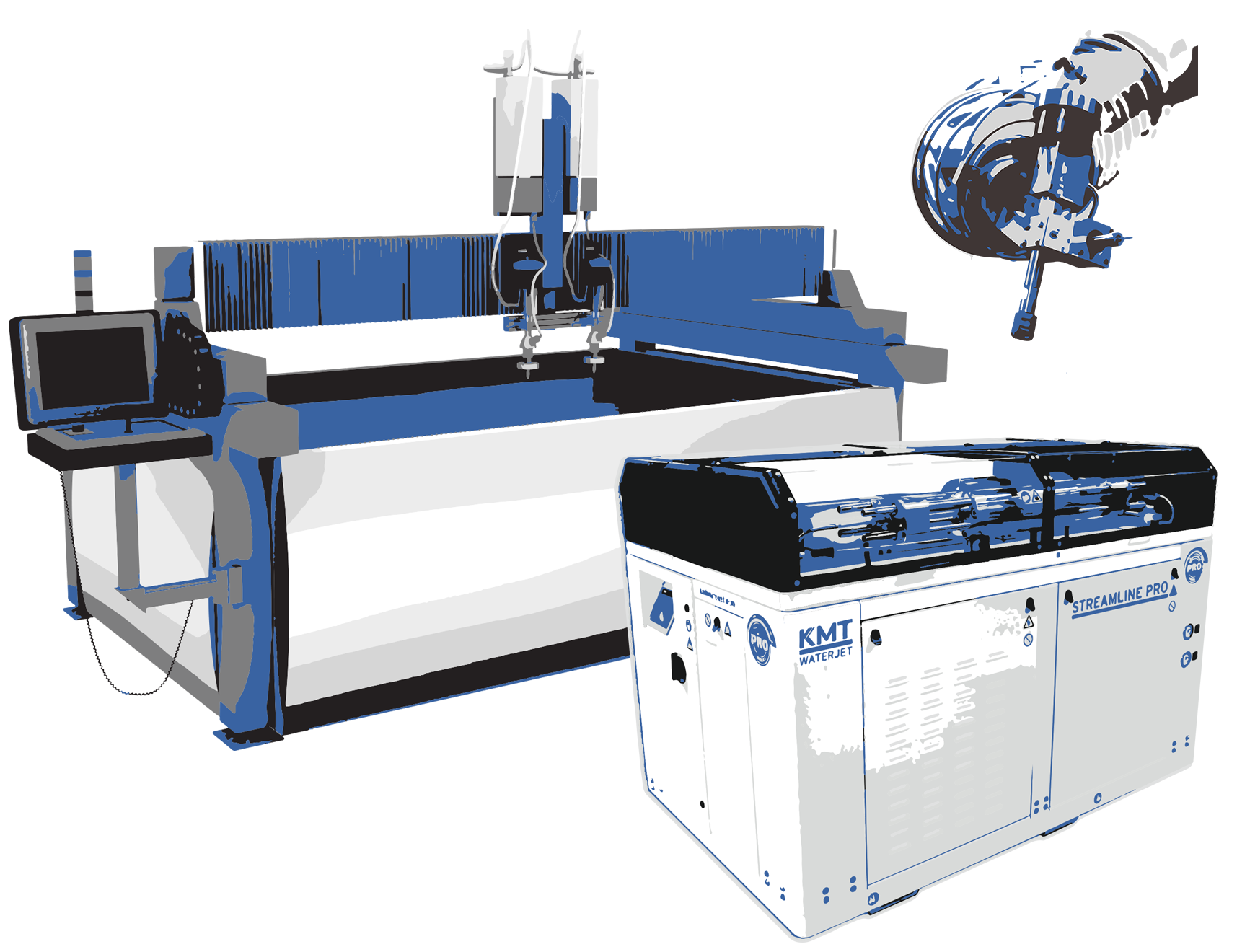
KMT waterjet OEM partner machines are powered by KMT pumps ranging from 6.200 bar to 3.800 bar, with installations available in over 100 countries.

The KMT Streamline PRO® 6.200 bar Waterjet Pumps will significantly increase production by cutting in less time and use up to 50% less abrasive to produce the Lowest Cost Per Part! The PRO pump is available in three horse-powers for a wide range of cutting applications: 125 and 60 PS

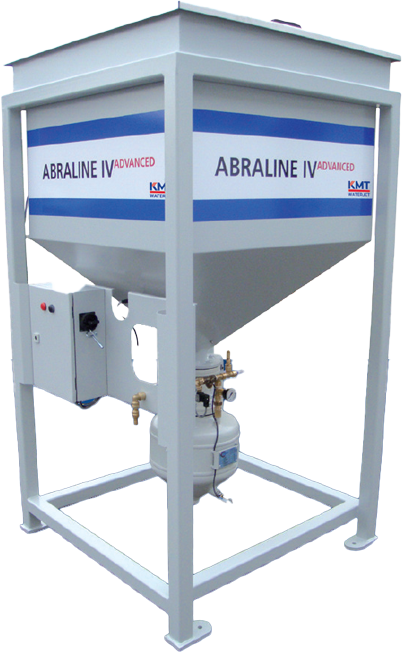
Precisely monitors abrasive feed usage during entire cutting process. Designed for large cutting machines which operate continuously and with multiple cutting heads. Capacity – 1.000 kg

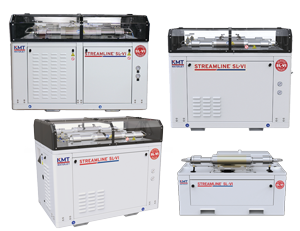
KMT Waterjet SL-VI Pumps have decades of proven performance and are considered the Industry Workhorse! The SL-VI Series of pumps are available in: 15, 30, 50 und 100 PS

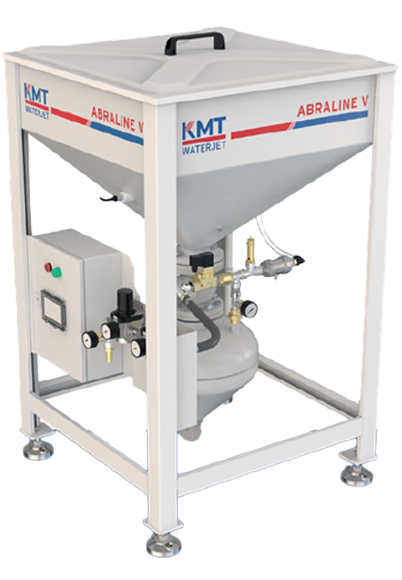
Precisely monitors abrasive feed usage during entire cutting process. Designed to sufficiently ensure the abrasive feed for average cutting needs. Capacity – 425 kg

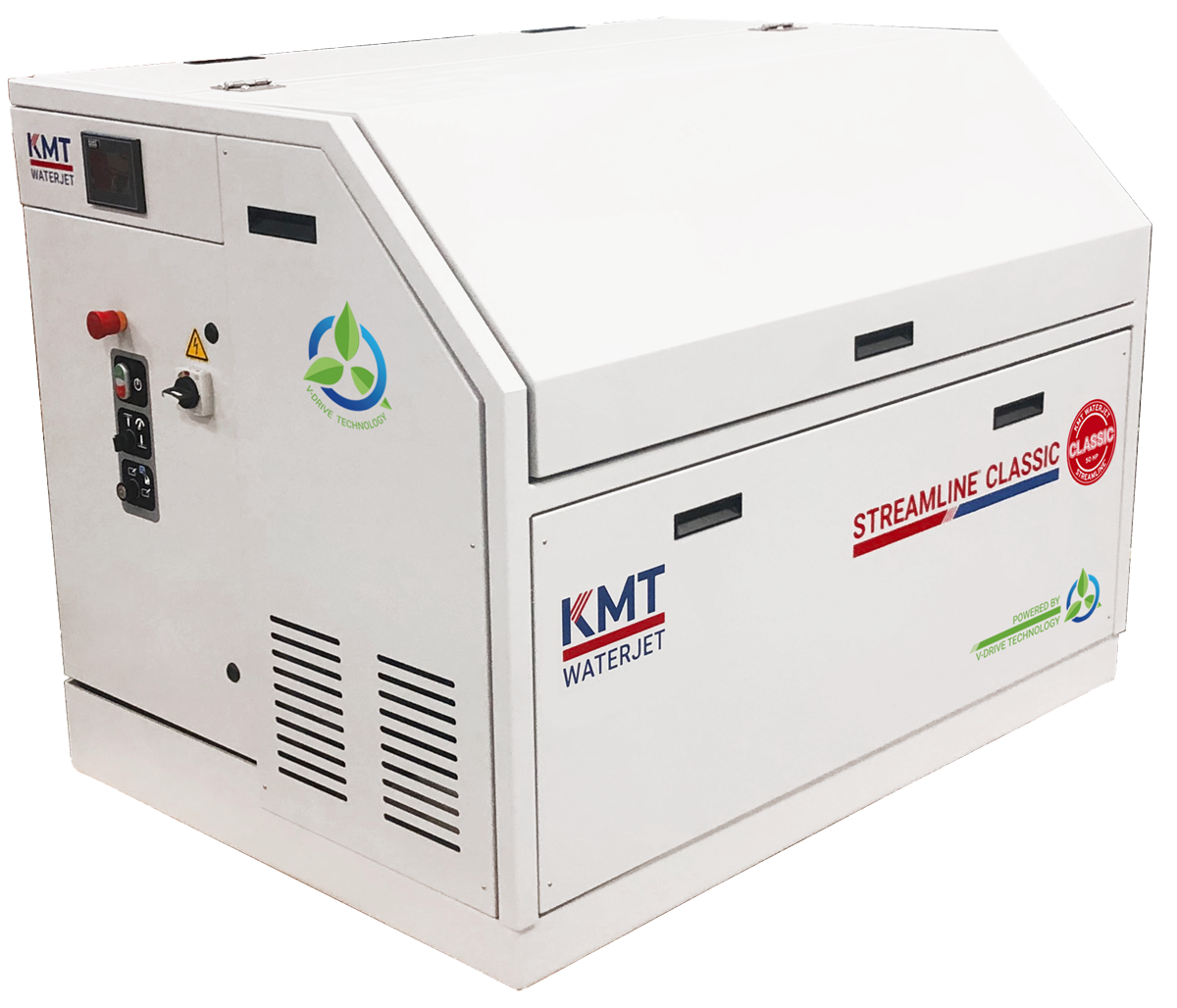
The STREAMLINE® CLASSIC with V-Drive combines the KMT proven intensifier concept with energy saving drive and control technology for energy savings and efficient waterjet cutting. Equipped with a speed-controlled motor drive, the CLASSIC V-Drive satisfies any criteria specifying an energy saving machinery.

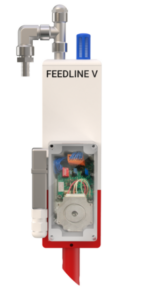
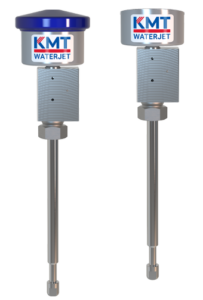
Optimized abrasive consumption for customized applications. Controlled through a central CNC controller or a potentiometer, the FEEDLINE V supplies the cutting nozzle with the optimized flow of abrasive, saving material and costs.

ATS Abrasive Removal Systems
Never shut down production for tank clean outs again. The all new ATS 2200 or 4400 is the perfect way to improve your waterjet operations.

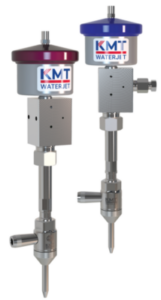
The KMT Waterjet IDE® (Integrated Diamond Eductor) One-piece Assembly Cutting Head is rated for pressures from 4.100 bar to 6.200 bar and is a waterjet nozzle breakthrough in simplicity & peak performance.

The self-aligning components of the KMT AUTOLINE® 4.100 bar and 6.200 bar cutting heads provide true, perfect alignment to extend the life of focusing tubes and mixing chambers.

PROVEN PERFORMANCE AT EXTREME PRESSURES! Our AQUALINE® pure water pneumatic valves have gained an industry-wide reputation for being among the quickest and the most reliable pure water cutting heads under extreme working conditions.

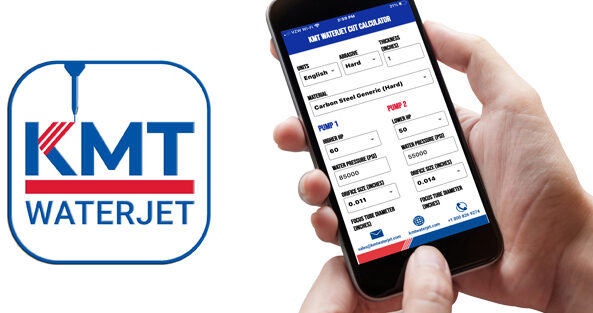
Compare 6.200 bar vs. 4.100 bar cutting and see how much faster you get the job done and at a lower cost per part! The KMT Waterjet Cut Calculator 2.0 App incorporates 25 materials, offers a wider range of substrate thicknesses, horsepower, orifice size, and abrasive rates.

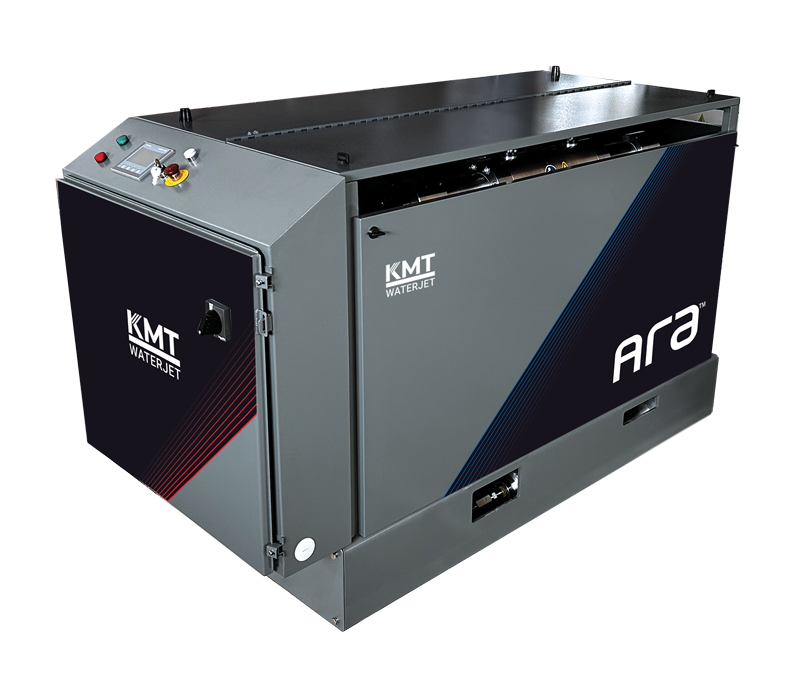
The Ara™ high-pressure pump meets all essential requirements for successful, economical and seamless operation of a waterjet cutting system. The highly reliable “SSEC” intensifier design is one of the key features of the AraTM pump.
Where are KMT Waterjet products used in the aerospace industry?
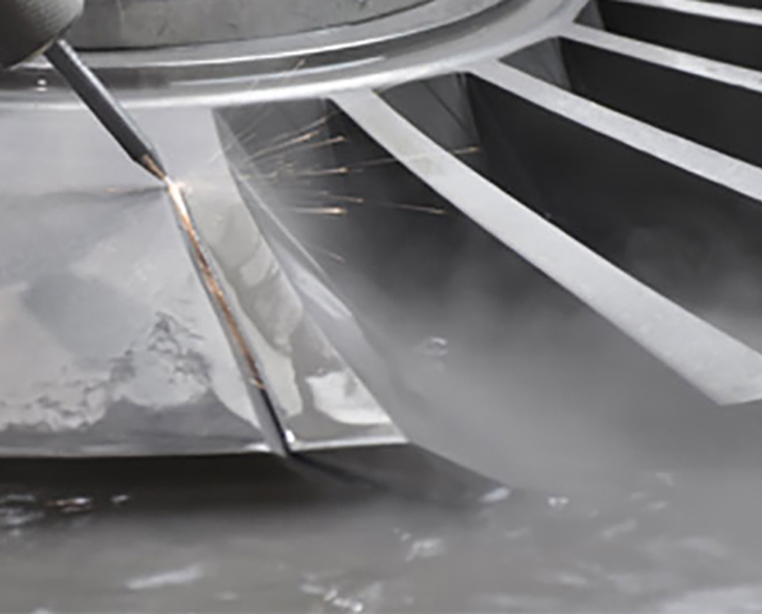
KMT Waterjet intensifier pump technology and abrasive waterjet cutting heads have been extensively used in the aerospace industry for cutting titanium, Inconel, brass, water jet cutting aluminum, and steel, as well as cutting composites from .039″/1 mm to 6″/150 mm.
What are the Advantages of six-axis robotics cells and five axis waterjet waterjet cutting systems?
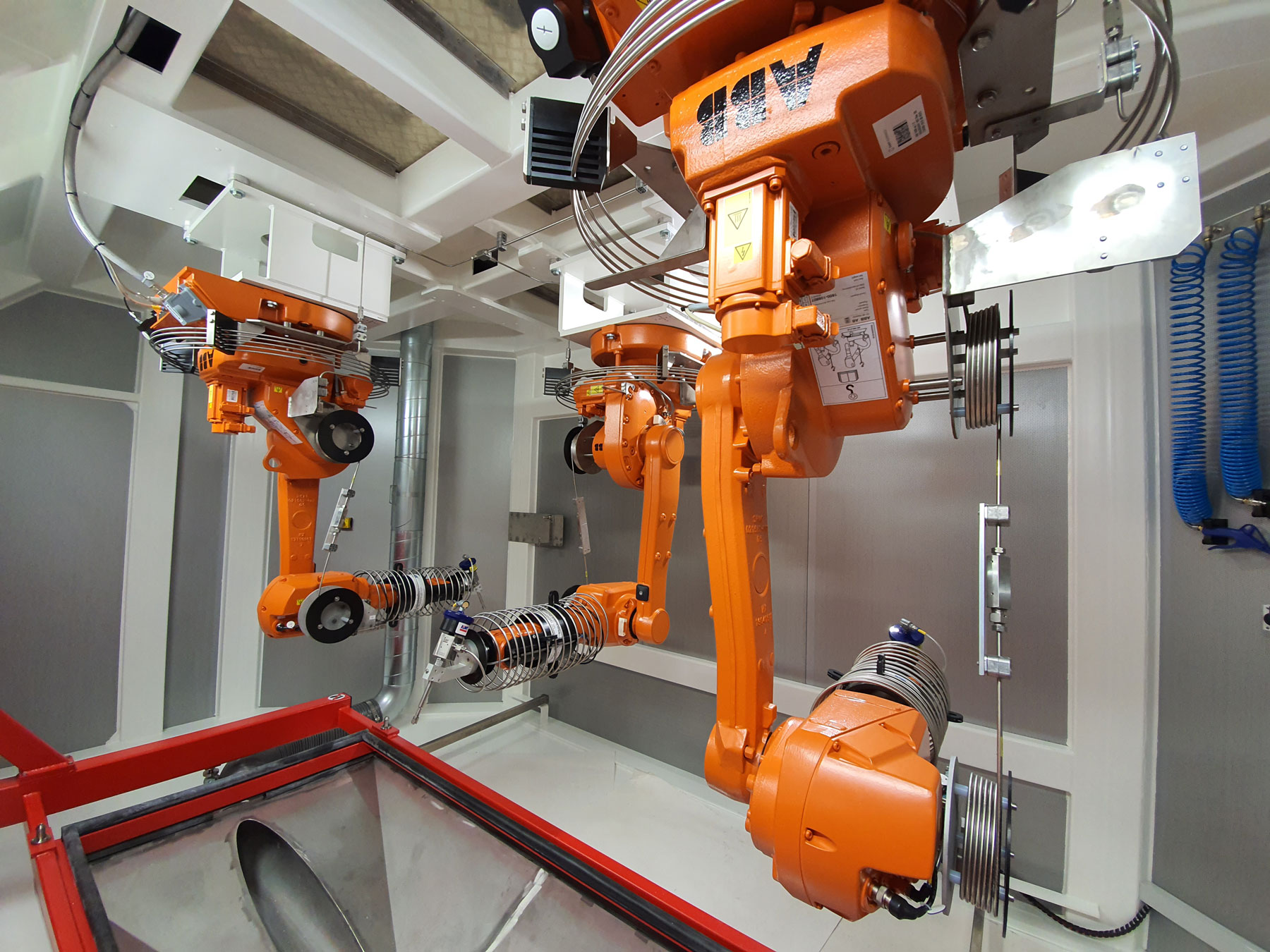
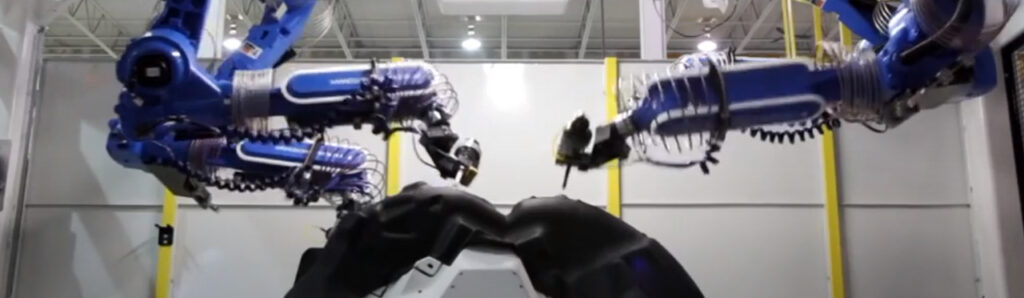
The KMT Waterjet global OEM network, such as Water Jet Sweden below, offers five-axis and six-axis robotic solutions for waterjet cutting in the aerospace industry:
Precision Cutting: Waterjet cutting with five-axis and six-axis robots allows for intricate and precise cuts on complex aerospace components, cutting complex geometric shapes, ensuring accuracy and consistency in manufacturing.
Versatility: Waterjet cuts multiple axes of various materials and shapes required in aerospace applications, from thin sheets to thick composites, with minimal setup changes.
Increased Efficiency: Integration of waterjet cutting with five-axis and six-axis robots streamlines the manufacturing process by reducing manual handling, minimizing setup time, and optimizing cutting paths, ultimately leading to higher productivity and reduced production costs.
No Heat-Affected Zone (HAZ): Waterjet cutting is a cold-cutting process that does not generate heat during cutting.
Variety of materials: Waterjet cutting can cut many materials used in aerospace manufacturing, including metals, composites, and plastics.
Minimal Material Waste: The narrow kerf width of waterjet cutting is particularly advantageous for expensive aerospace-grade materials.
Environmentally Friendly: Waterjet cutting is an environmentally friendly process as it does not produce hazardous fumes, gases, or waste materials.
No Secondary Finishing Required: Waterjet cutting produces clean, smooth edges without burrs or roughness.
What are the time and cost savings: The precision of KMT Waterjet diamond orifice cutting nozzles, and UHP KMT water jet pump up to 90,000psi/6.200bar, the minimal kerf cutting will produce finished edges saving both time and money in production.
Cold cutting process: Waterjet cutting is ideal for automotive, medical, and aerospace applications where material integrity cannot be compromised by heat.
Versatility: KMT OEM integrators machines are capable of performing various types of cuts, from rapid hole drilling on waterjet tables to detailed cuts for aerospace applications including fully automated six-axis robotic waterjet cutting cells.
Abrasive additive: Waterjet cutters utilize an abrasive additive garnet to achieve clean, burr-free cuts, eliminating the need for secondary finishing operations.
How does waterjet cutting contribute to reducing material waste in the aerospace industry? 
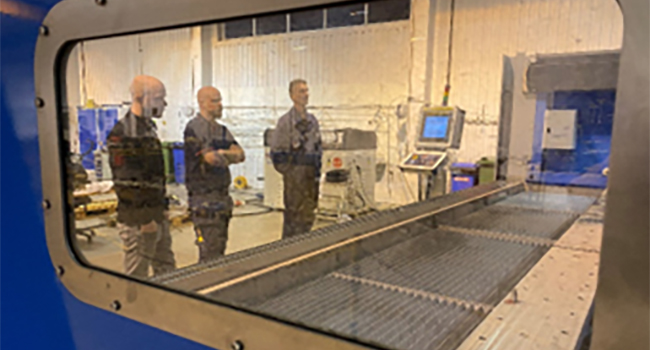
Waterjet cutting produces minimal kerf widths, reducing material waste and optimizing material usage in aerospace manufacturing.
Photo: Water Jet Sweden team and Radius Aerospace team, managing the test process.
What safety measures are in place when using waterjet technology for aerospace applications?
Safety measures include machine guarding, operator training, and adherence to safety protocols to prevent accidents and injuries.
Can waterjet cutting be used for both small and large-scale aerospace projects?
Waterjet cutting is versatile and can be used for both prototyping small aerospace parts and manufacturing large structural components.
What types of aerospace components benefit the most from waterjet cutting?
Complex shapes, tight tolerances, and materials sensitive to heat are best suited for waterjet cutting in aerospace, such as engine components and interior panels.
How does waterjet cutting compare to traditional machining methods in aerospace manufacturing?
Waterjet cutting offers advantages such as no heat-affected zones, minimal tool wear, and reduced setup times compared to traditional machining methods.
What are the maintenance requirements for waterjet machines used in aerospace applications?
Regular maintenance includes checking abrasive levels, nozzle wear, and pump performance to ensure optimal cutting performance.
How does waterjet cutting support the production of complex aerospace geometries?
Waterjet cutting can precisely cut intricate shapes and patterns, enabling the production of complex aerospace components with minimal setup time.
How does waterjet cutting contribute to the overall efficiency of aerospace manufacturing processes?
Waterjet cutting reduces setup times, eliminates the need for secondary operations, and allows for quick prototyping, thus improving overall efficiency.
Are there any specific certifications required for using waterjet technology in aerospace applications?
Certifications may vary based on industry standards and regulations, but adherence to quality management systems like ISO 9001 is often necessary.
Can waterjet cutting be used for aerospace materials with varying thicknesses?
Waterjet cutting can accommodate materials of varying thicknesses, from thin sheet metal to thick structural components.
What surface finishes can be achieved with waterjet cutting for aerospace components?
Waterjet cutting typically produces smooth surface finishes, but secondary processes like abrasive waterjet machining can achieve specific textures if required.
How does waterjet cutting accommodate the demand for rapid prototyping in the aerospace industry?
Waterjet cutting allows for quick turnaround times for prototypes due to its minimal setup requirements and ability to cut a wide range of materials.
What factors should be considered when selecting waterjet cutting parameters for aerospace materials?
Factors include material type, thickness, desired cut quality, and production volume, among others, to optimize cutting parameters for specific aerospace applications.
Can waterjet cutting be integrated seamlessly into existing aerospace manufacturing workflows?
Waterjet cutting systems can be integrated into existing workflows with proper planning and coordination to enhance overall manufacturing capabilities.
What environmental benefits does waterjet cutting offer in the aerospace sector?
Waterjet cutting produces no hazardous fumes or by-products, minimizing environmental impact and promoting sustainability in aerospace manufacturing.
How does waterjet technology support the trend toward lightweight materials in aerospace design and manufacturing?
Waterjet cutting is suitable for cutting lightweight materials like composites and aluminum alloys, aligning with the aerospace industry’s focus on weight reduction and fuel efficiency.
Welcome to KMT Waterjet. To continue, please select a language from the options below.
HELP CENTER
Contact form
KMT Waterjet has global offices to assist you in your region. Contact us using the following form, and the message will be forwarded to the local office which can provide the best support.
Contact form
KMT Waterjet has global offices to assist you in your region. Contact us using the following form, and the message will be forwarded to the local office which can provide the best support.