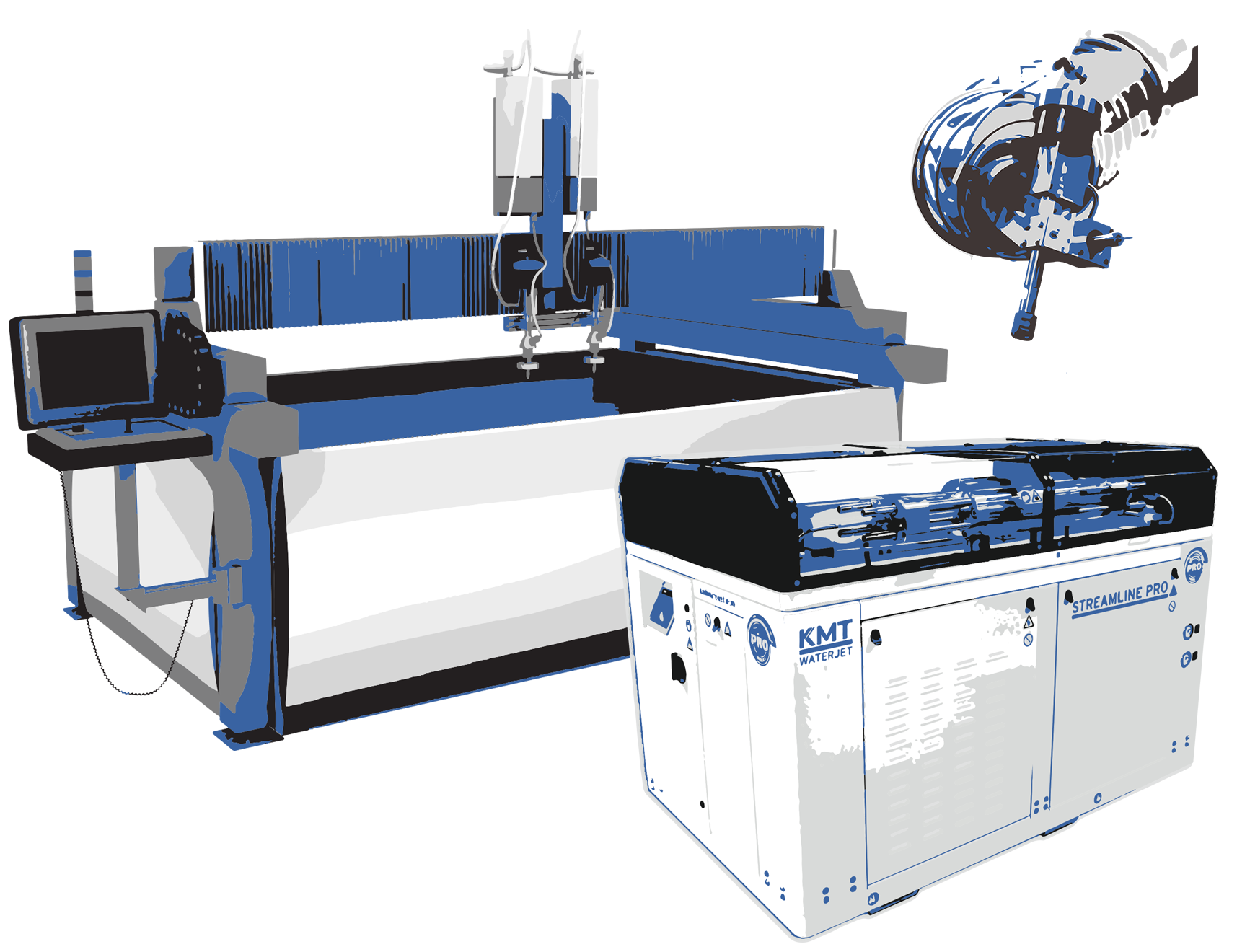
Las máquinas de corte por chorro de agua de los socios OEM de KMT están equipadas con bombas KMT que van desde 6200 bar a 3800 bar, con instalaciones disponibles en más de 100 países.
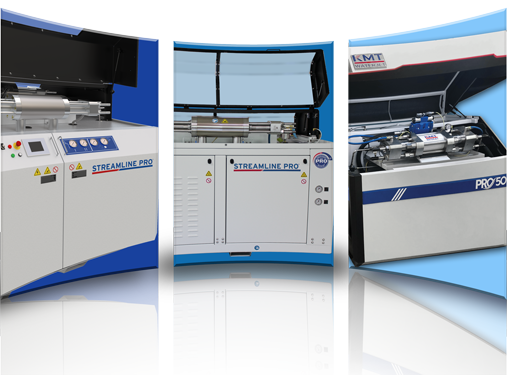
Bombas PRO de 6200 bar: el chorro de agua más rápido del mundo
Las bombas de chorro de agua KMT Streamline PRO® de 6200 bar aumentarán significativamente la producción al cortar en menos tiempo y utilizar hasta un 50 % menos de abrasivo para producir el menor costo por pieza. La bomba PRO está disponible en tres potencias para una amplia gama de aplicaciones de corte: 125, 60 y 50 HP
Tolvas abrasivas ADS
Las tolvas abrasivas de la serie ADS de KMT Waterjet Systems para máquinas de corte por chorro de agua se rellenan fácilmente durante el proceso de corte, ¡sin necesidad de detener el corte! Estas tolvas están disponibles en 2 tamaños: 500 y 2000 lb.
STREAMLINE® SL-VI 4100 bar
Las bombas de chorro de agua SL-VI de KMT tienen décadas de rendimiento comprobado y se consideran el caballo de batalla de la industria. La serie de bombas SL-VI está disponible en: 15, 30, 50, 100 y 200 HP
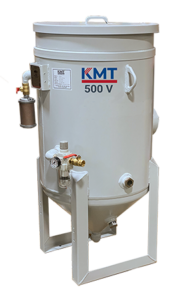
Tolva de abrasivo de 500 V
Nuestra tolva de 500 V controla con precisión la disponibilidad de abrasivo suficiente durante todo el proceso de corte y lo transfiere neumáticamente al dispositivo de dosificación integrado.
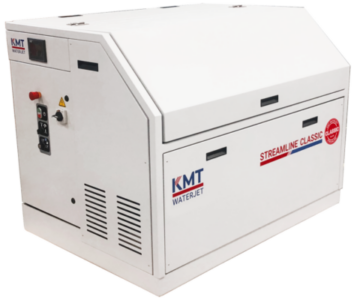
Bomba KMT CLASSIC de 4100 bar
La nueva serie STREAMLINE® CLASSIC emplea tecnología de carrera larga diseñada para facilitar su uso, confiabilidad y máxima autonomía… ¡La clásica KMT con tecnología moderna!
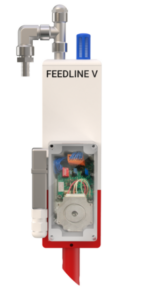
Alimentador de abrasivo FEEDLINE V
Consumo de abrasivo optimizado para aplicaciones personalizadas. Controlado a través de un controlador CNC central o un potenciómetro, el FEEDLINE V suministra a la boquilla de corte el flujo optimizado de abrasivo, ahorrando material y costos.
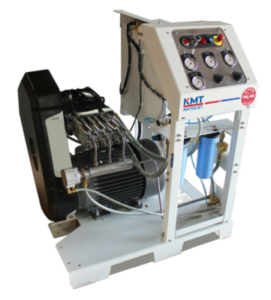
Bomba de accionamiento directo TRILINE® de 3800 bar
La bomba TRILINE® tiene un excelente valor de costo de propiedad y se puede utilizar como una unidad independiente para las necesidades de corte diarias.
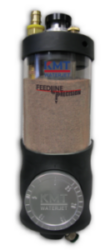
Medidor de abrasivo FEEDLINE PRECISION
El sistema de medición de abrasivo Feedline Precision es una opción económica y confiable para la aplicación precisa de abrasivo a la boquilla de corte.
Sistemas de eliminación de abrasivos ATS
Nunca más tendrá que detener la producción para limpiar tanques. Los nuevos ATS 2200 o 4400 son la manera perfecta de mejorar sus operaciones de corte por chorro de agua.
Cabezales de corte de diamante IDE®
El cabezal de corte de una pieza IDE® (eductor de diamante integrado) de KMT Waterjet está diseñado para soportar presiones de hasta 4100 bar y 6200 bar y es una boquilla de chorro de agua que supone un gran avance en simplicidad y máximo rendimiento.
Cabezales de corte AUTOLINE®
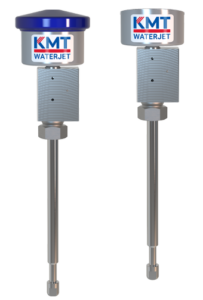
Los componentes autoalineantes de los cabezales de corte de barra KMT AUTOLINE® 4100 y PRO 6200 proporcionan una alineación perfecta y verdadera para prolongar la vida útil de los tubos de enfoque y las cámaras de mezcla.
Cabezales de corte de agua pura AQUALINE®
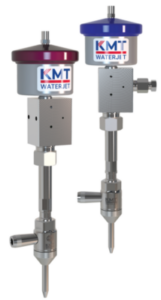
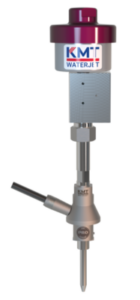
RENDIMIENTO COMPROBADO EN PRESIONES EXTREMAS. Nuestras válvulas neumáticas de agua pura AQUALINE® se han ganado una reputación en toda la industria por estar entre los cabezales de corte de agua pura más rápidos y confiables en condiciones de trabajo extremas.
Aplicación de cálculo de corte por chorro de agua KMT
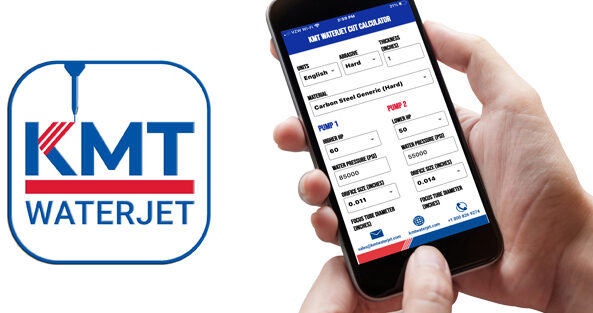
Compare el corte con 6200 barras frente al de 4100 barras y compruebe cuánto más rápido puede realizar el trabajo y con un menor coste por pieza. La aplicación de cálculo de corte por chorro de agua KMT 2.0 incorpora 25 materiales y ofrece una gama más amplia de espesores de sustrato, potencia, tamaño de orificio y tasas de abrasivo.
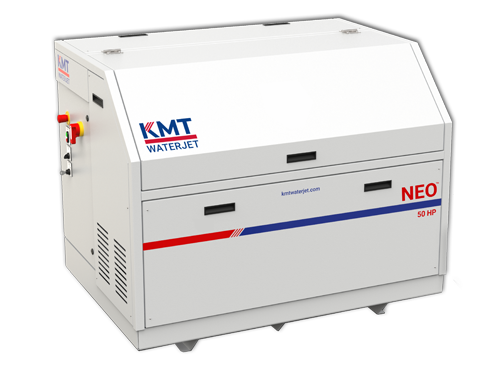
Bomba NEO 4100 bar
La bomba NEO de KMT Waterjet incorpora más de 50 años de experiencia ofreciendo logros tecnológicos de corte por chorro de agua sin igual.
El chorro de agua gana: El enfrentamiento de corte definitivo
Waterjet shines in versatility and cold-cutting power, making it a go-to for industries like aerospace, automotive, architecture and fabrication for cutting titanium, foils, rubber, composites, glass and stone.
Waterjet cutting uses high-pressure water (often mixed with abrasives) to slice through materials with precision and versatility.
Below is a KMT comparison chart highlighting the key benefits of waterjet over other common cutting methods focusing on practical advantages like material compatibility, edge quality, speed, and environmental factors.
Note: Benefits can vary by specific application, material, and machine setup provided by our expert OEM’s.
KMT has a global OEM network offering a complete line of waterjet table machines including five-axis waterjet to robotic integrated six-axis motion control.
CUTTING METHOD
KEY BENEFITS OF WATERJET
WATERJET WINS! No heat-affected zone (HAZ) means no material warping or hardening; cuts thicker materials and non-metals (like stone or composites) that lasers struggle with; safer for heat-sensitive items without toxic fumes.
WATERJET WINS! Cleaner, smoother edges with less slag and no thermal distortion; handles non-conductive materials (e.g., plastics, ceramics) that plasma can’t; quieter operation and better for intricate designs without rough finishes.
WATERJET WINS! Faster for bulk cutting and works on non-conductive materials; no need for electrodes or dielectric fluids, reducing setup time and costs; versatile for thicker parts without the slow, spark-based erosion process.
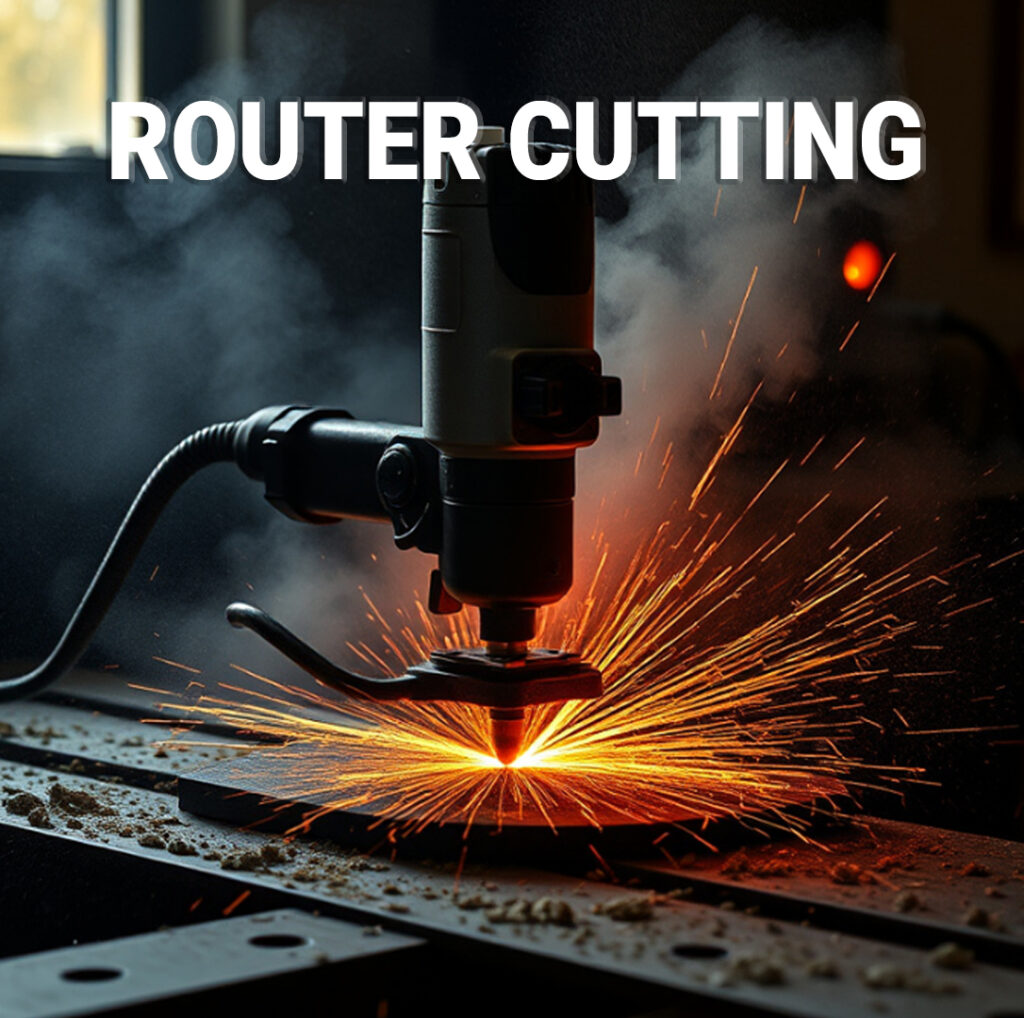
WATERJET WINS! No chipping, melting, or dust clouds—ideal for soft woods/plastics without tool wear; precise cuts on irregular shapes and thicker stacks; eco-friendlier with water recycling and no need for expensive bits.
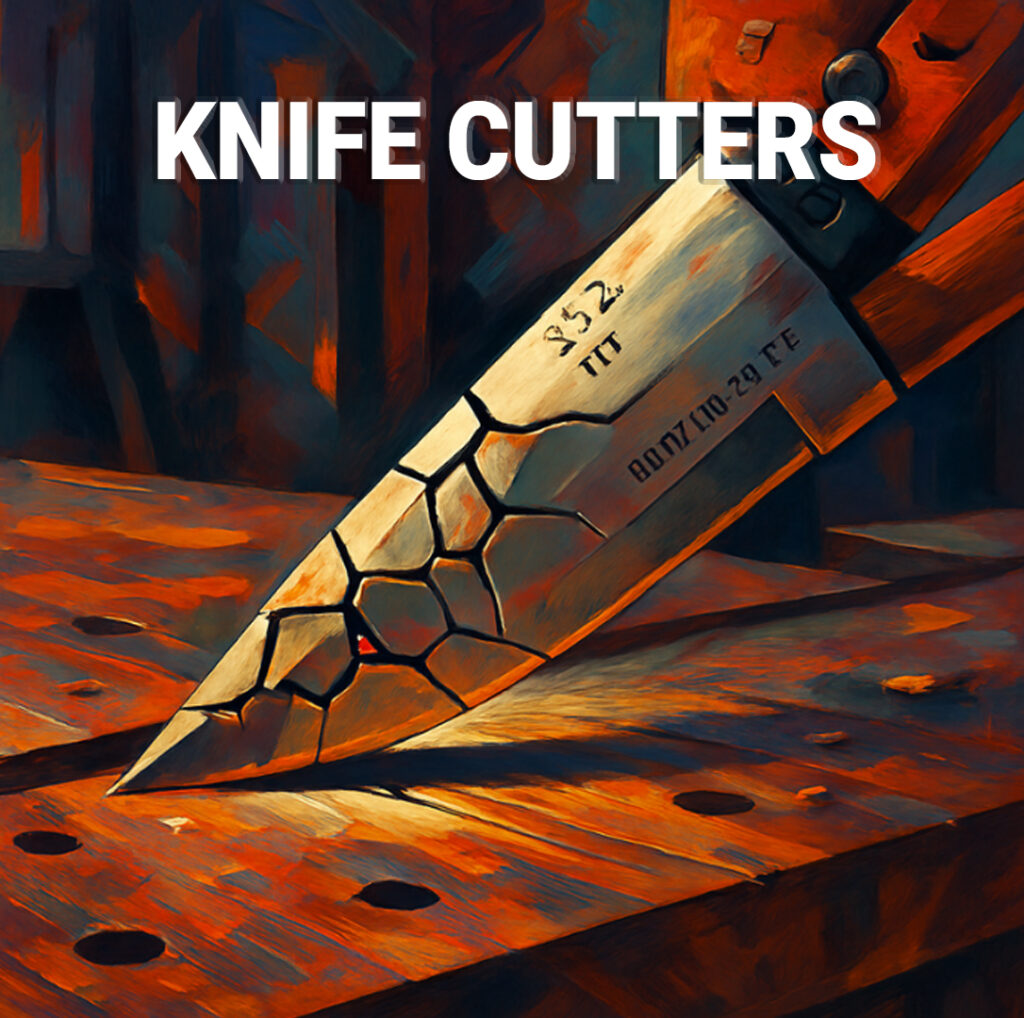
WATERJET WINS! Superior for hard or thick materials that knives can’t penetrate (e.g., metals, glass); higher precision and speed without blade dulling or material compression; enables complex 3D cuts beyond simple straight lines.
WATERJET WINS! Offers greater precision and intricate cutting capabilities than a Saw, especially for detailed shapes and softer materials that might chip or fray with a saw blade; reduces material waste and provides a smoother finish without additional processing.
Una nueva tecnología simplifica la fabricación de motores a reacción Cuando se fabrican turbinas de motores a reacción, se suele utilizar la electroerosión por hilo,
¡MISIÓN COMPLETADA! UN CHORRO DE AGUA 3D A TAMAÑO REAL PARA EL RADIO AEROESPACIAL. Radius Aerospace fabrica una amplia cartera de estructuras, componentes, subconjuntos y
KMT Waterjet has global offices to assist you in your region. Contact us using the following form, and the message will be forwarded to the local office which can provide the best support.
KMT Waterjet tiene oficinas en todo el mundo para ayudarte en tu región. Ponte en contacto con nosotros mediante el siguiente formulario, y el mensaje se remitirá a la oficina local que pueda ofrecerte la mejor asistencia.